
The Project
ZARATHUSTRA in a nutshell
ZARATHUSTRA (Revolutionizing Advanced Electrodeless Plasma Thrusters for Space Transportation) was a 1.5 M€ ERC Starting Grant project to investigate and develop electrodeless plasma thrusters (EPTs), a new class of space propulsion technology that promises many advantages over existing ones. The project ran for 5 years, from 2021 to 2026. Its central goal was to:
Unravel the physical underpinnings of electrodeless plasma thrusters
and revolutionize their design.
Read on to find out more about the motivation, objectives, methods, and impact of the project.
The need for a revolution in space propulsion
Plasma propulsion offers important mass savings compared to chemical propulsion, making it an appealing technology to reduce mission costs. Traditional devices like Hall thrusters and gridded ion engines are extensively used and keep improving, but have various drawbacks as well:
- Heavy and complex electronics drive the cost
- Electrodes that erode over time and limit lifetime
- Difficulty to scale up or down to small and high powers needed in many applications
- Limited range of usable propellants (such as expensive xenon)
- Limited throttleability
Meanwhile, the space transportation sector is becoming more demanding and is expected to have a continued growth in the coming decades.
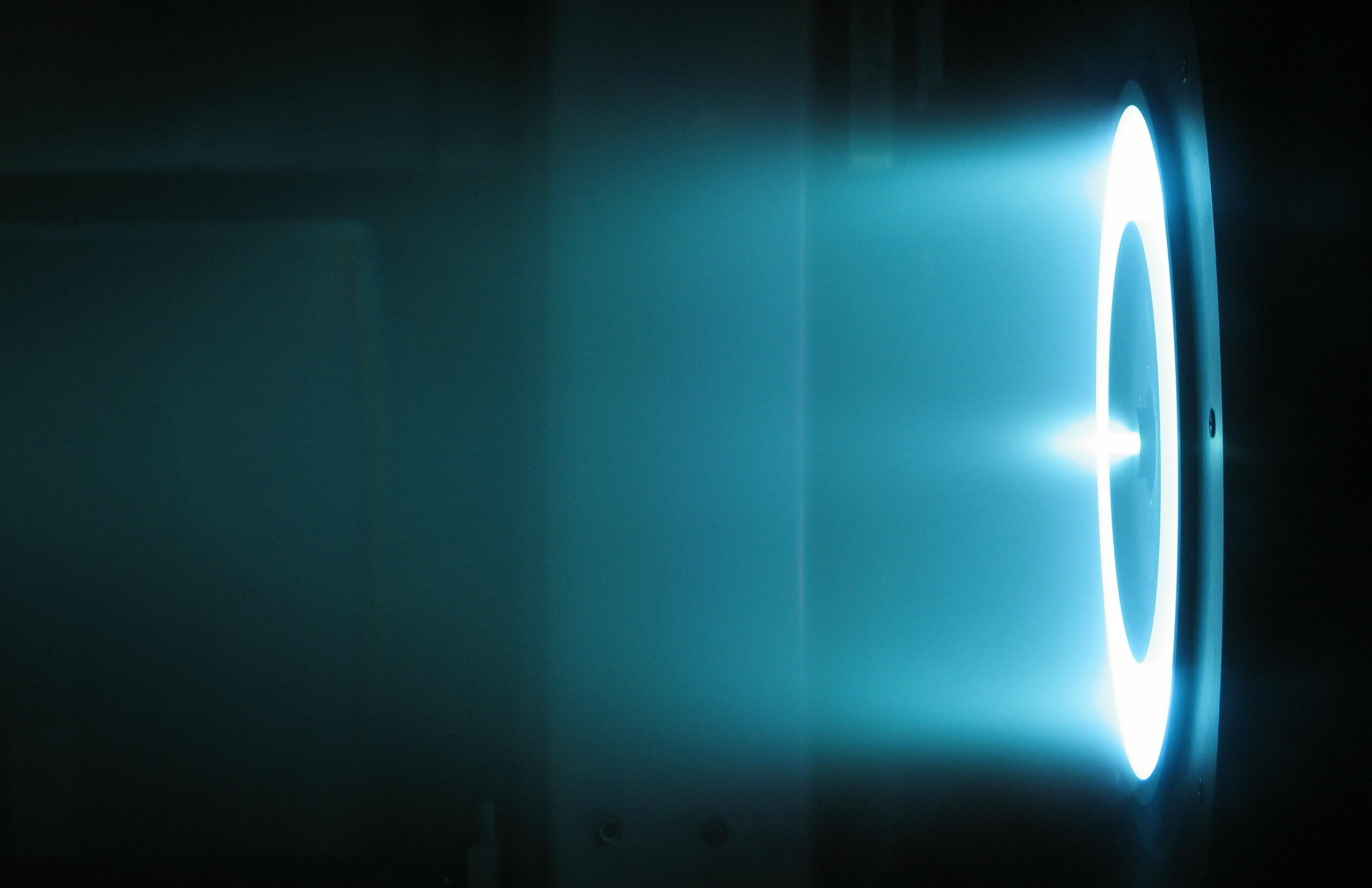
NASA's JPL 6 kW Hall thruster
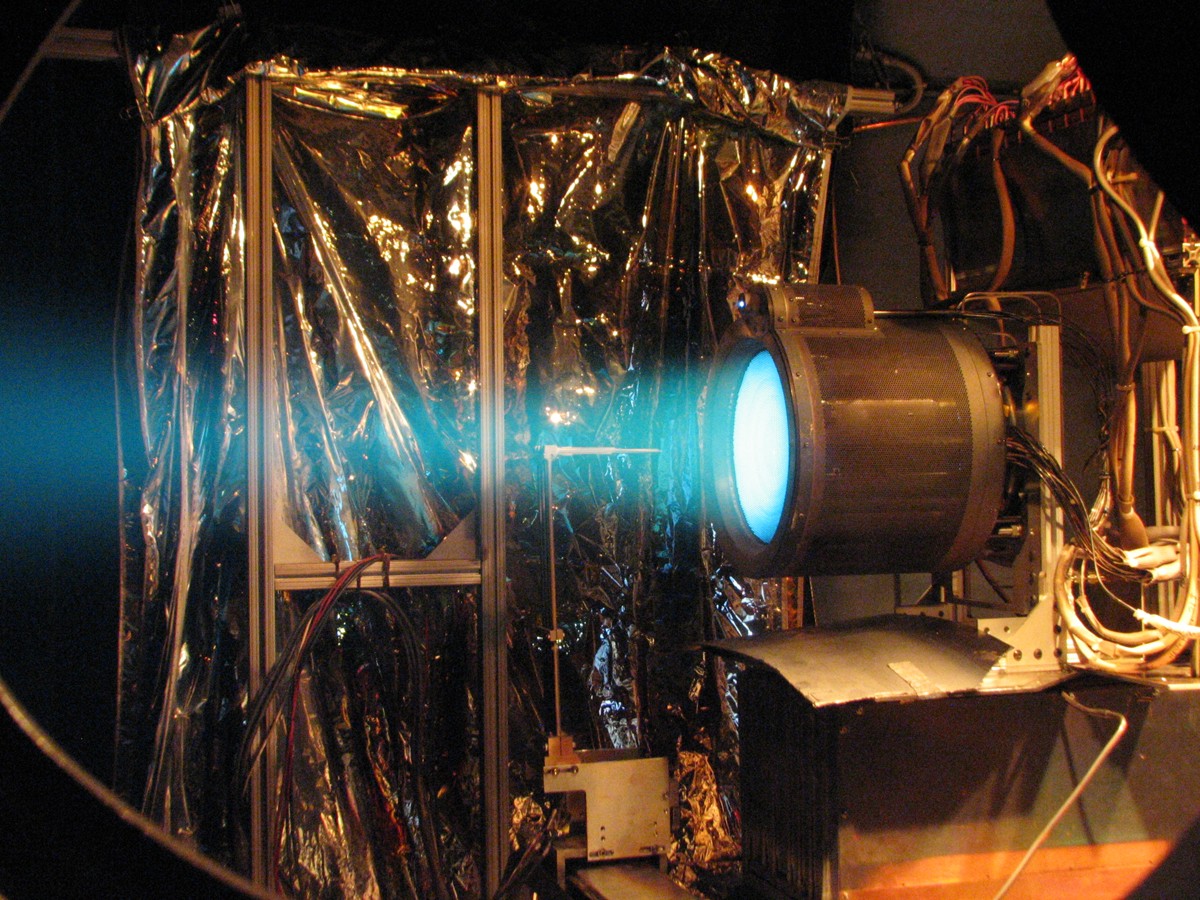
NEXIS ion engine
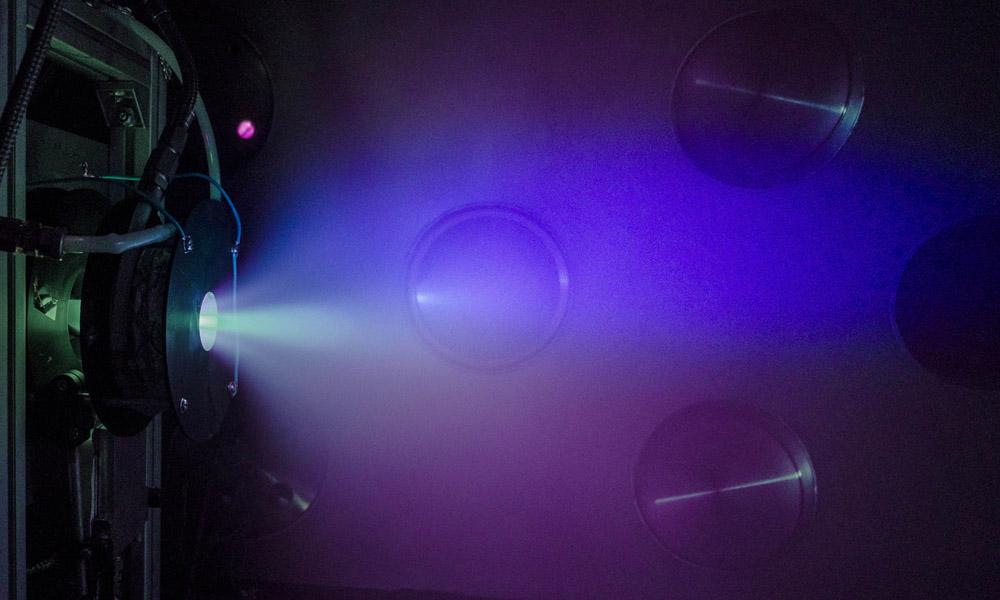
EP2-SENER Helicon Plasma Thruster
EP2's Electron-Cyclotron Resonance Thruster
Electrodeless plasma thrusters
Getting rid of electrodes is the key achievement of a new class of devices, known as Electrodeless Plasma Thrusters (EPTs), currently under research. These thrusters deliver power to the plasma with electromagnetic waves, rather than using naked electrodes in contact with it. This promises important advantages over traditional electric propulsion:
- Lighter and simpler electronics, and therefore a more economic design
- No critical elements exposed to plasma erosion, hence larger lifetime
- Ability to operate with virtually any propellant (including chemical species of interest in the context of in-situ resource utilization)
- Scaling to high/low powers does not depends on electrodes anymore, opening up interesting possibilities
Moreover, plasma acceleration occurs contactlessly in an external magnetic nozzle, whose field can be tuned in-flight to enable:
- Adaptable plasma acceleration profile and thruster throttling
- Thrust vector control without moving parts
Example EPT technologies are the Helicon Plasma Thruster and the Electron-Cyclotron Resonance Thruster.
Key challenges and necessary breakthroughs
In spite of their promising outline, when ZARATHUSTRA started in 2021 EPTs were still far behind the more mature technologies like Hall thrusters and gridded ion engines in terms of performance: their thrust efficiency was low (ca. 15%), compared to mature technologies (ca. 50-70%).
This problem was attributed to a lack of understanding of several physical mechanisms involved in the operation of these devices, in particular the role of instabilities and walls in the anomalous transport of the plasma particles, and the phenomena behind and related to the interaction of electromagnetic fields with the plasma used to energize it. Indeed, there was still a big distance between the predictions of our best models and experimental measurements.
Moreover, the current cylindrical design of EPTs has inherent issues that are hard to overcome in this geometry, such as the existence of a magnetically-unshielded rear wall in the plasma source where a large fraction of the plasma is lost, a large plume divergence, and the generation of a large net magnetic dipole that interacts with the geomeagnetic field, complicating the integration of these thrusters in a satellite.
Major breakthroughs in our physical understanding of EPTs and a revolution in their design were needed to unblock their progress.
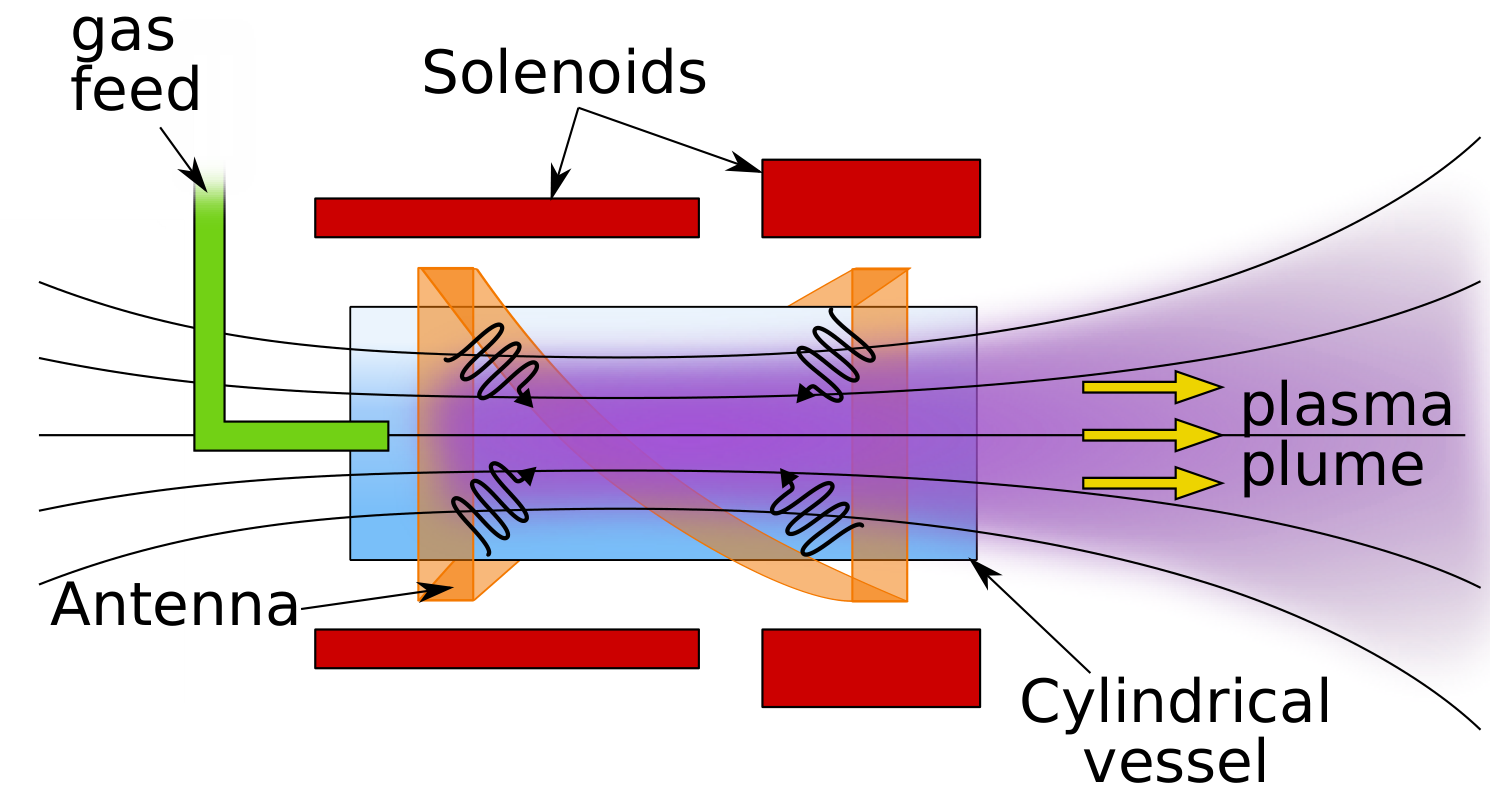
Schematic of a cylincrical Electrodeless Plasma Thruster. While the lateral walls of the plasma source are shielded by the magnetic field, the magnetic lines impinge directly on rear wall, which is unshielded
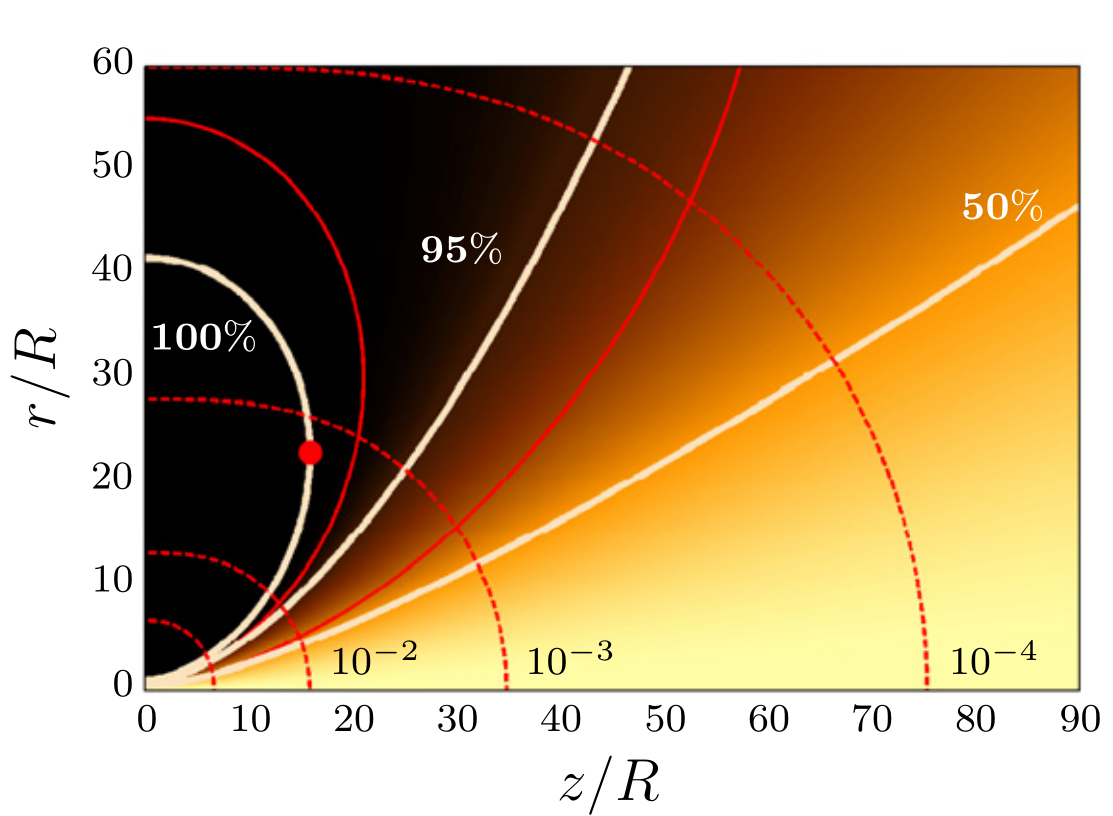
Simulation of the plasma expansion in the magnetic nozzle of a cylindrical EPT, from Merino et al, illustrating the divergence of the ion streamlines (white) compared to the magnetic lines (red). Only half of the nozzle is shown.
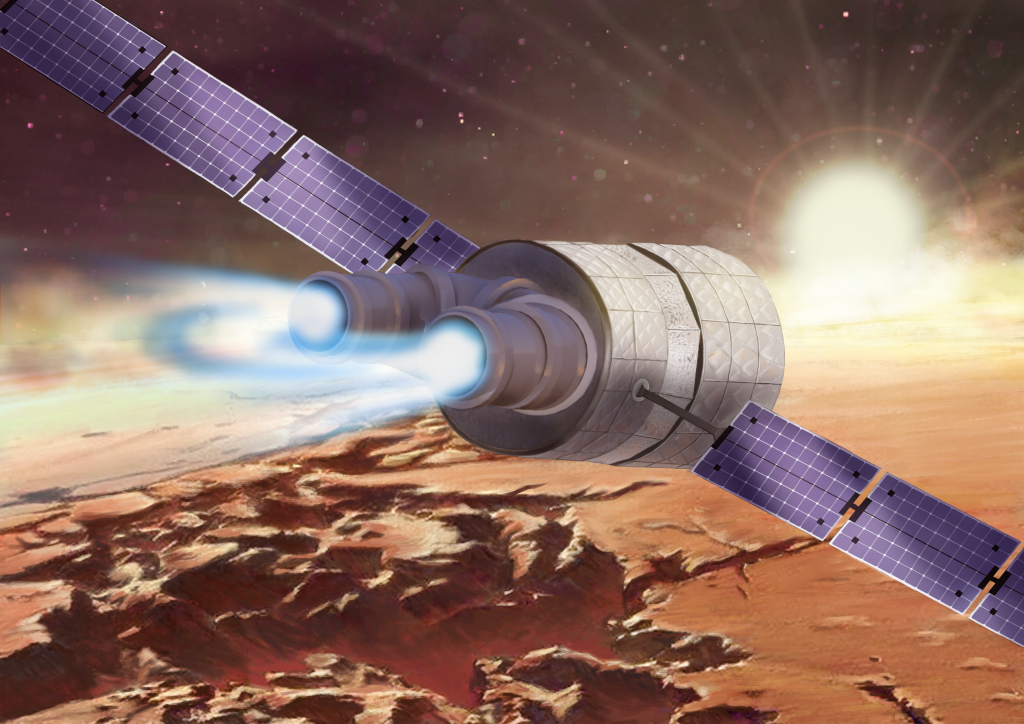
Magnetic Arch thruster propelling a spacecraft (artist impression).
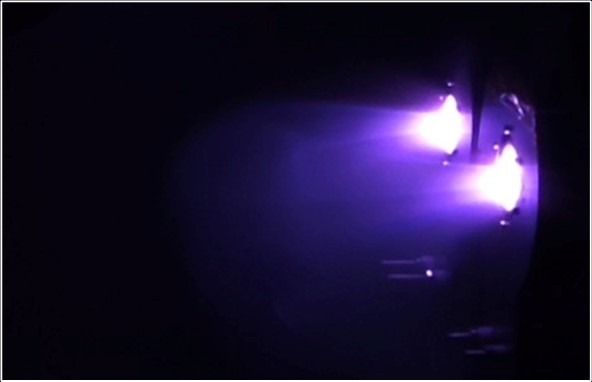
Magnetic Arch forming outside of a cluster of two Electrodeless Plasma Thrusters with opposite polarities, firing in the UC3M large vacuum chamber, from Boyé et al.
The Magnetic Arch
To overcome the limitations of cylindrical EPTs, Merino patented in 2019 a new thruster configuration based on a horseshoe-like geometry, called the Magnetic Arch thruster. This configuration eliminates the rear wall and has full magnetic shielding of all internal walls. The device is reminiscent of a toroidal magnetic configuration in plasma fusion, but with an intentional swelling in the external region to allow the plasma to expand.
Moreover, the Magnetic Arch thruster uses a novel plasma acceleration approach — the Magnetic Arch itself. This configuration forms also when clustering two cylindrical EPTs in parallel with opposing polarities to cancel the magnetic dipole of the setup. Contrary to a simple magnetic nozzle, the plasma-induced magnetic field plays an essential role in the operation, and its interesting physics were expected to show some similitude with solar protuberances and flares. Plume divergence was expected to be lower, and contactless thrust vector control without moving parts (by modifying the applied field) to be possible and easier than in cylindrical EPTs.
ZARATHUSTRA Objectives
ZARATHUSTRA aimed to unravel the physical underpinnings of electrodeless plasma thrusters and revolutionize their design.
To do so, the project focused on three key objectives:
- Understand the underlying physics of electromagnetic field-plasma interaction in EPTs
- Identify the root causes of the enhanced, anomalous plasma transport in EPTs
- Develop and test a laboratory proof of concept of the new, non-cylindrical Magnetic Arch for plasma acceleration.

Physics of electromagnetic plasma heating
Reveal the underlying mechanisms behind electromagnetic fields-plasma interaction in EPTs, and identify optimal power deposition schemes

Anomalous transport in Electrodeless Plasma Thrusters
Elucidate the role of plasma oscillations, wall interactions, and applied EM fields on anomalous transport in these devices.

Revolutionize EPT design
Establish a first laboratory-scale proof of concept of a Magnetic Arch topology for plasma acceleation to determine its feasibility, study its physics and operation, and identify potential advantages and issues.
Research methods
ZARATHUSTRA developed its own multidisciplinary approach to tackle the objectives above:
- A two-tiered modeling and simulation scheme that combines fast, low-fidelity fluid plasma models with a high-fidelity electromagnetic kinetic code.
- Vacuum chamber experiments that enabled the team to obtain direct measurements of the plasma properties in cylindrical and non-cylindrical EPTs, to be cross-validated with the models. Multiple plasma diagnostics were used, including fast probes to resolve the oscillations present in the plasma thruster plume.
- State of the art data-driven analysis algorithms that can squeeze out valuable information and insight from both simulation and experimental data, including modal analysis techniques (POD, HODMD) and time signal analysis methods.
Experiments took place in the large vacuum chamber located in the laboratory of the Plasmas and Space Propulsion Team at Universidad Carlos III de Madrid.
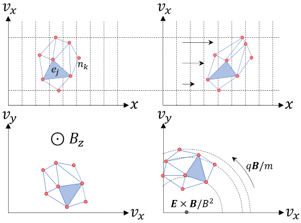
Understanding the basic features of the motion of charged particles in phase space in the presence of time- and position-dependent fields enables the construction of fast and accurate kinetic codes.
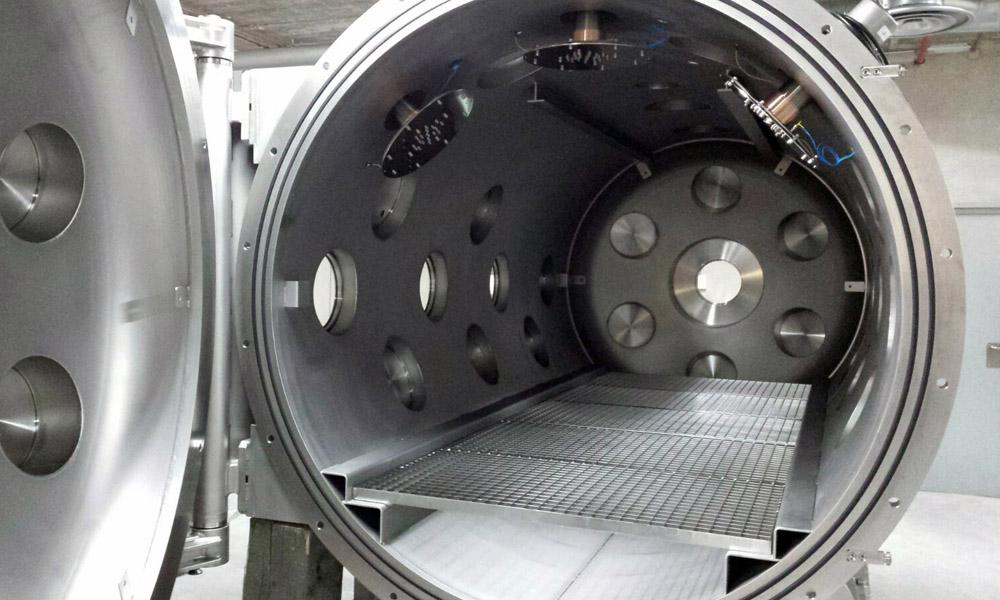
Inside view of EP2's large vacuum chamber, especially designed for testing electric propulsion systems. The chamber has 1.5 m diameter and 3.5 m longitude, and has a pumping speed of more than 35000 l/s Xe.
"The ultimate goal of ZARATHUSTRA was to unblock and lead the progress of electrodeless plasma thrusters, which may one day become a key enabling technology of a flourishing space economy"
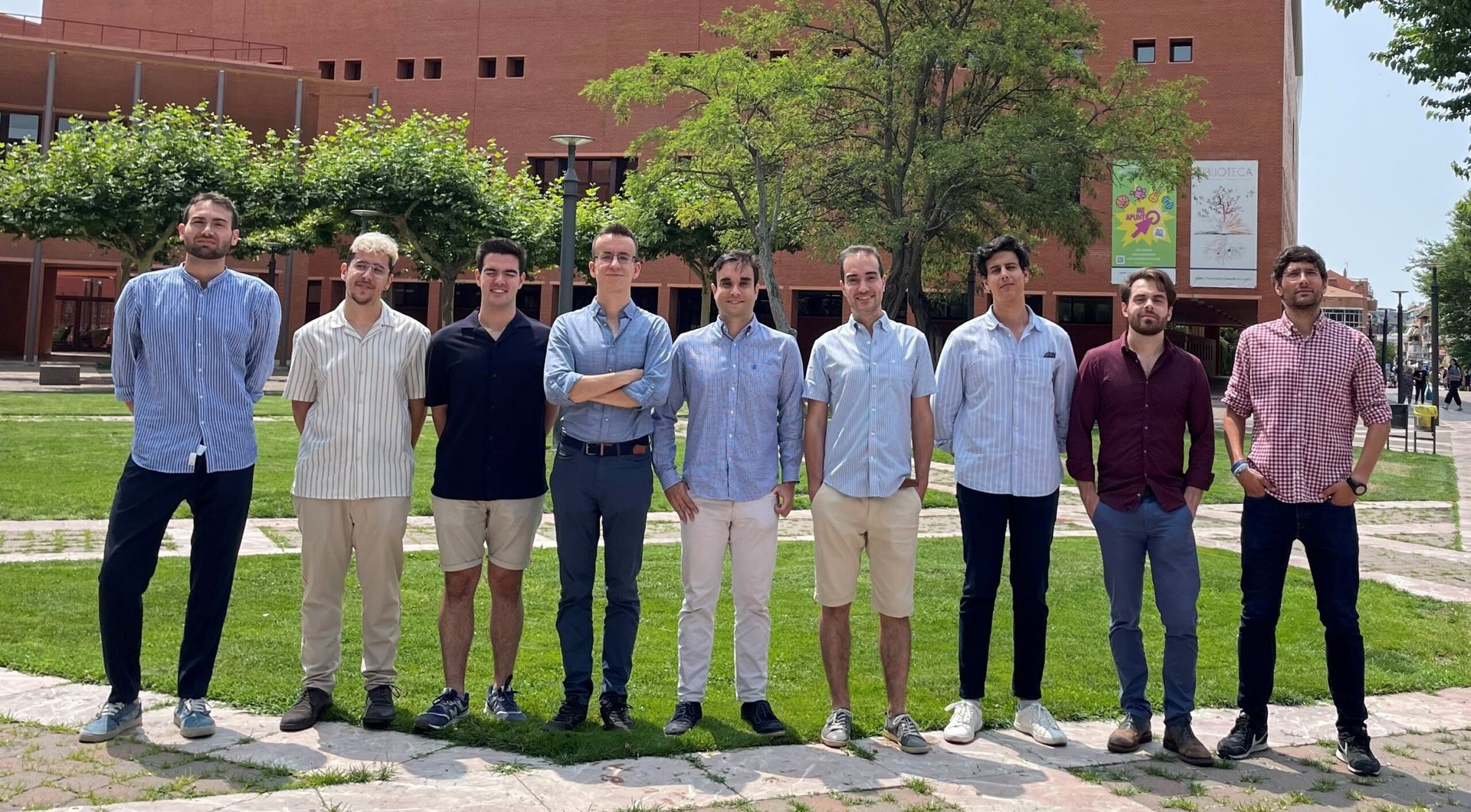
The ZARATHUSTRA team in the UC3M campus.
Project impact
ZARATHUSTRA advanced the understanding of electrodeless plasma thrusters in its three areas of work, although a complete, predictive theory of anomalous transport in these devices remains an open problem.
- On electromagnetic heating, the project developed new wave-plasma and kinetic-electromagnetic simulation tools, including energy-conserving implicit particle-in-cell algorithms, and methods to verify wave-plasma codes.
- On anomalous transport, it combined theory, simulation, experiments, and data-driven analysis to characterize the oscillations and instabilities in magnetic nozzles and E×B discharges, and their contribution to cross-field transport.
- On thruster design, it built and tested the first laboratory prototypes of the Magnetic Arch, with a cluster of two electron-cyclotron resonance sources, and modeled the plasma expansion in this configuration with fluid and hybrid PIC/fluid codes.
The results are collected in 18 peer-reviewed journal articles (and 3 more under review), over 30 conference contributions, and openly available datasets and codes, all listed in the Results page.
The project hosted 9 PhD theses, carried out fully or partly within it (7 already defended), and 7 BSc and MSc theses. It organized two international workshops, on E×B plasmas (2022) and on electrodeless plasma thrusters (2025), and worked with LANL, ICARE-CNRS, and ONERA, among other partners.
Its research continues in two new ERC grants: the Proof of Concept grant NEPTUNE, which explores the innovation potential of the Magnetic Arch, and the Consolidator Grant ROCINANTE (2026–2031), which studies the fluctuations, instabilities, and turbulence that drive plasma losses in these thrusters.